
Evolving Bombs!
CrazyLabs LTDAction
4.13.00K Reviews
- Version
- 7.9.3.0
- Installs
- 10.00M
- Age Rating
- Teen
Screenshots
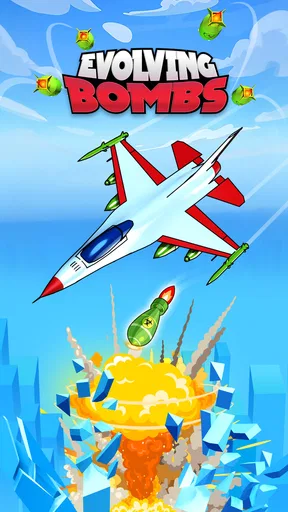
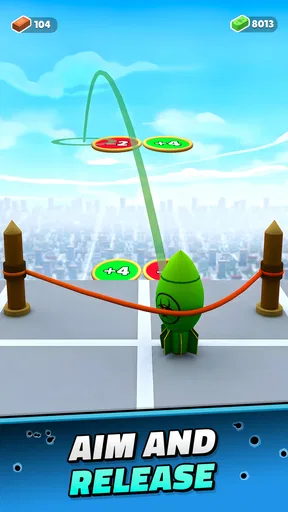
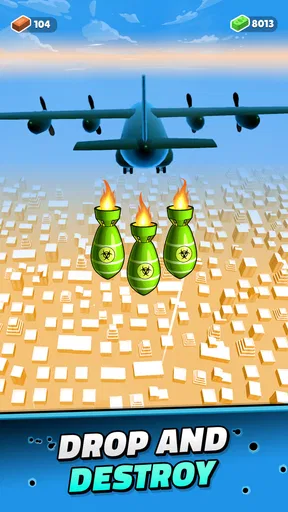
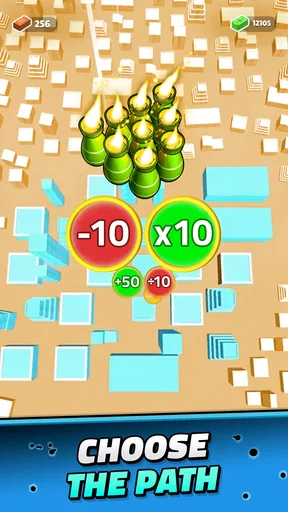
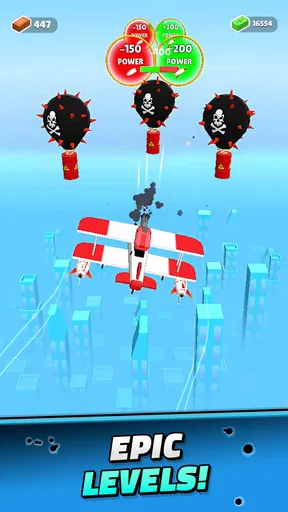
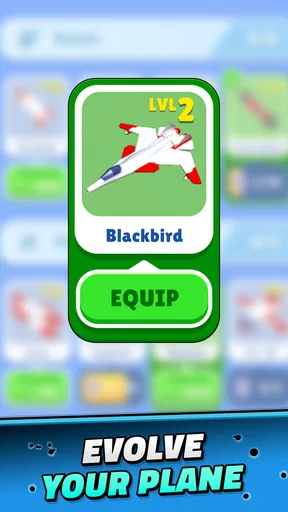
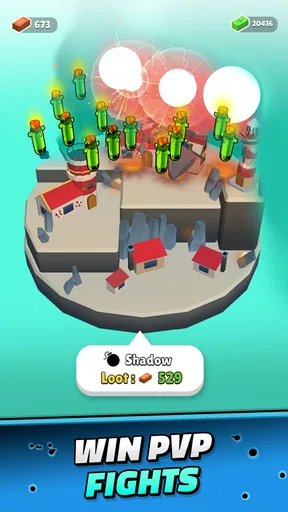
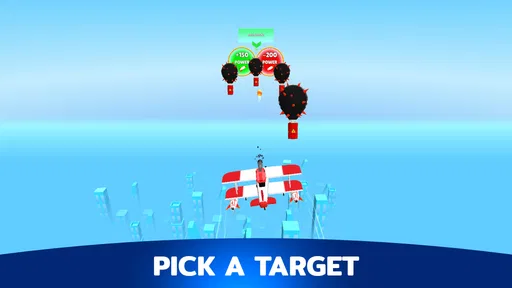
Our Review of Evolving Bombs!
 Analysis by Appyee
I spent time with Evolving Bombs! as a quick-fire action game, and my first impression was that it wants to make aerial combat feel playful rather than technical. You control warplanes, aim bombs with a slingshot-style gesture, and try to turn each launch into a satisfying hit. That simple idea makes it easy to understand within moments, but the real question is whether the repeated aiming and upgrading stays enjoyable after the novelty fades.
My short answer is that it works best for players who want compact action sessions with a clear physical interaction. It is not trying to replace a deep flight simulator or a large competitive war game. Instead, it sits in the lighter arcade end of the action category, where the appeal comes from timing, quick decisions, and watching each attack develop on screen. I found it most enjoyable when I treated it as a game for short breaks rather than a title demanding a long uninterrupted sitting.
What to consider before choosing it
The central decision is whether you enjoy aiming mechanics more than traditional direct control. In many airplane games, the player steers continuously, manages altitude, or focuses on dogfights. Here, the important moment is the bomb launch. The slingshot approach changes the rhythm: I spent less time worrying about detailed aircraft handling and more time judging angle, force, and the likely result of a release.
That distinction matters. If you want a realistic cockpit experience, this game will feel deliberately simplified. If you want something that can be picked up without learning a complicated control scheme, the design is much more welcoming. The action is built around a gesture that feels familiar from physics-based mobile games, so I did not need a long tutorial period before understanding what the game expected from me.
I also looked at how well the game fits ordinary mobile use. Because the basic idea is immediately readable, it suits a spare few minutes while waiting for an appointment or taking a short break. I would not choose it for a quiet evening when I want a story, extensive exploration, or a carefully developed simulation. Its strongest use case is the small gap in the day where I want a quick burst of action without preparing for a major session.
The game is free to download, which makes trying it straightforward. It is listed for Teen audiences, so parents should consider that age guidance before handing it to a younger player. It runs on Android versions from 8.0 onward, making it accessible to many older devices, although the experience can still depend on the phone’s general performance and how comfortably its screen handles repeated gestures.
The developer is CrazyLabs LTD, and the game has built a sizable audience, with over ten million installs. Its average rating is 4.1 from around eighty-eight thousand ratings, alongside roughly three thousand written reviews. I read those figures as a sign of broad interest rather than a guarantee that every player will enjoy the same loop. The concept is easy to approach, but arcade repetition is naturally more appealing to some people than others.
How the bomb-launching loop feels
The most distinctive part of the experience is the way the attack is prepared. Instead of treating bombing as a background action, the game makes it the thing I actively perform. Pulling back and releasing gives the attack a tactile quality, and the result feels connected to my input rather than being reduced to a simple tap on an enemy.
That makes small corrections meaningful. A rushed release can waste an opportunity, while a more deliberate angle can make the same basic action feel clever. I found myself looking at the situation before launching instead of tapping immediately. This is one of the game’s better qualities: the controls are simple, but they still leave room for a little judgment.
A useful habit is to avoid treating every launch as a race. I had better results when I took a brief moment to read the scene, decide what the bomb needed to do, and then commit. That tiny pause is easy to overlook because the interface encourages fast movement. It also helps prevent the common mobile-game mistake of repeating the same gesture without learning from the previous attempt.
The evolving-bomb idea gives the loop a sense of continuation. I did not experience it as a single static weapon repeated forever; the promise of development makes each successful action feel connected to the next stage of play. Still, this progression is most satisfying when I could see a practical effect in my decisions. Players who need a large variety of weapons, environments, or missions may eventually find the core interaction too narrow.
My advice is to judge the game by the quality of its individual launches, not by expecting it to become a full-scale aircraft campaign. The fun is concentrated in the physical aiming and the immediate payoff. When that interaction clicks, the simplicity is a strength. When it does not, the surrounding action may not be enough to carry the experience for long.
Small-session strategy that makes a difference
One non-obvious strength is how naturally the game supports a reset-and-try-again mindset. A failed attempt does not need to ruin the whole break; I could treat it as information about timing and positioning, then adjust on the next run. That makes it more forgiving psychologically than action games where a mistake can erase a long session of progress.
I also recommend separating experimentation from efficiency. On a first attempt, I sometimes tried a dramatic launch simply because it looked promising. On later attempts, I focused on a safer angle and watched how the bomb behaved. That approach helped me understand the game’s physical language without assuming that the most spectacular-looking option was always the best one.
Another practical tip is to play with a stable grip. Slingshot controls reward a clean gesture, and an awkward hand position can make an otherwise sensible launch feel inconsistent. This is especially relevant when playing one-handed during a commute or while standing. For more deliberate sessions, using both hands to keep the device steady made the interaction more comfortable.
I would also avoid judging your progress by speed alone. The game invites quick action, but a slightly slower decision can be more valuable than several frantic attempts. That trade-off is easy to miss in a title designed around explosions and motion. For me, the best rhythm was observe, aim, release, then use the result to change the next decision.
Where this game wins against familiar action choices
Compared with conventional mobile flight games, this one has a much lower entry barrier. I did not have to learn a cockpit layout, remember multiple buttons, or spend time mastering continuous steering before the action became understandable. That makes it a better choice for someone who wants the fantasy of commanding a warplane without the workload associated with simulation-style controls.
It also has an advantage over many tap-only arcade games because the gesture gives the player a little more ownership of the outcome. A tap can feel like issuing a command; a slingshot release feels more like shaping the attack. That difference is small, but it gives the game a clearer identity than a generic sequence of automatic explosions.
Against story-driven action games, the advantage is convenience. I could start playing without committing to dialogue, exploration, or a long mission structure. The game’s short-form design makes it useful when I want immediate interaction rather than a narrative investment. It is also easier to recommend to a friend who normally avoids complicated mobile games but enjoys simple physics-based challenges.
The game’s audience size supports that accessibility. With more than ten million installs, it is clearly not an obscure experiment, and its 4.1 average from about eighty-eight thousand ratings suggests that many players find the basic formula appealing. I would still treat popularity as a starting point, not proof of long-term depth. The deciding factor remains whether you enjoy repeating a focused action loop.
Where another category may fit better
I would point a realism-focused player toward a different kind of airplane game. Someone who wants aircraft specifications, cockpit procedures, detailed navigation, or sustained dogfights is likely to feel that this title removes too much complexity. Its warplane theme is a setting for arcade action, not a promise of authentic aviation.
Players who prefer broad progression systems may also want a larger action game. The bomb-launching mechanic is the star, and that focus keeps the experience clear, but it can also make the game feel limited if you are looking for character development, open maps, or a large collection of unrelated activities. A conventional campaign game would be a better fit for someone who needs constant changes of context.
There is another trade-off with physics-based alternatives. Games built around slower puzzles may give you more time to plan each move, while this title pushes the aerial action forward. If you enjoy carefully arranging objects and solving a level with one perfect solution, the explosive pace may feel less thoughtful than you prefer. On the other hand, if puzzle games seem too static, the aircraft theme and immediate action provide more energy.
I would also skip it if you strongly dislike free-to-play design. The game is free, but optional in-app purchases range from $0.99 to $39.99 per item. That range is important because a player who wants a completely purchase-free experience may find the surrounding monetization distracting, even if the basic download costs nothing. I recommend deciding in advance whether you are comfortable playing without buying anything.
Progression, spending, and the cost of switching
The current version is 7.9.3.0, so this is an established release rather than a first attempt at the concept. For a new player, that means the sensible approach is to install it, play enough to see whether the aiming loop feels natural, and only then think about any optional spending. Buying early would make little sense if you are still unsure whether repeated bomb launches are your kind of entertainment.
My own rule for games like this is simple: first identify the friction, then decide whether money would actually solve it. If the problem is that you do not enjoy the core gesture, a purchase will not change the fundamental experience. If you already like the loop and only want convenience, optional spending may feel more reasonable, but it should remain a choice rather than an assumed part of the entry process.
The cost of switching from another action game is low in terms of learning. The controls are compact, and the game’s premise is clear enough to understand quickly. The larger cost is preference: moving here means accepting a narrower loop in exchange for faster access and simpler control. A player leaving a large action title may miss the variety, while someone leaving a complicated flight game may appreciate the relief.
There is also a time cost. Because the game is easy to start, it can encourage “one more attempt” behavior. I found it useful to decide before opening it whether I wanted a short break or a longer session. That small boundary kept the game enjoyable and stopped the repetition from turning into background habit. It is a particularly useful approach for players who already spend too much time on quick mobile games.
For device owners, the minimum Android requirement of 8.0 is modest, but I would still keep expectations practical on older hardware. Fast gesture games benefit from a responsive screen and comfortable performance. If your phone struggles with action titles generally, the issue may not be the game’s design, but it can still affect how satisfying the aiming feels.
Who should install it today
I recommend this game to players who want a free action title with an immediately understandable control idea, especially those who enjoy physics-based aiming and short sessions. It is a good match for someone who likes experimenting with angles, learning from failed attempts, and seeing a simple bomb mechanic develop over time.
It is also a sensible choice for a friend who says that flight games look interesting but seem too complicated. The game offers the visual and thematic appeal of warplanes without requiring the player to behave like a pilot. That makes it approachable, and the Teen content rating gives adults a clear age reference when deciding whether it is suitable for a younger household member.
I would not recommend it as the main game for a player seeking a deep aircraft simulation, a long narrative, or a constantly changing multiplayer-style experience. I would also be cautious if you dislike optional purchases or become bored by repeated gestures. In those cases, a more specialized flight game, a story-led action game, or a slower physics puzzle would probably deliver a better match.
After playing it, my view is that the game succeeds by keeping its promise focused. It does not need a complicated control panel to make bombing feel interactive. The slingshot launch gives each attack a moment of personal input, while the evolving structure provides a reason to continue beyond the first few explosions. Those strengths are real, but they depend heavily on enjoying the central loop.
My recommendation is to try it as a compact arcade action game, not as a flight simulator. Give the aiming mechanic enough time to become familiar, use failed launches to adjust your technique, and hold off on purchases until you know the repetition suits you. If you want quick aerial action with a tactile gesture, it is an easy game to sample. If you need realism, variety, or a substantial campaign, you will probably be happier choosing an alternative built around those priorities.
In the end, I see Evolving Bombs! as a practical pick for short, active breaks. Its free entry, broad device compatibility from Android 8.0, and straightforward controls lower the risk of trying it. The 4.1 average and large install base show that the concept has found an audience, but my recommendation is still personal rather than automatic: install it when the idea of lining up an explosive launch sounds fun, and skip it when you are looking for a much deeper kind of action game.
Verdict
Strengths of Evolving Bombs!
- Simple controls make it easy to start playing immediately.
- Short rounds are ideal for quick gaming sessions.
- Bomb upgrades add variety and encourage strategic choices.
- Bright visuals make the action easy to follow.
- Works well for players who enjoy casual arcade challenges.
Limitations of Evolving Bombs!
- Gameplay can become repetitive after extended sessions.
- Difficulty may feel uneven as challenges increase.
- Some upgrades may require considerable time to unlock.
- The screen can become visually busy during intense moments.
- Replay value may depend heavily on personal interest in score chasing.
Other Releases by CrazyLabs LTD
View All
Hair Dye
Role Playing4.4

Monster High™ Beauty Salon
Role Playing4.5

AMAZE!
Puzzle4.6

Miraculous Ladybug & Cat Noir
Action4.5
Similar Picks in This Category
View All
Temple Run 2: Endless Escape
Imangi Studios4.1

PUBG MOBILE
Level Infinite4.3

Free Fire: 9th Anniversary
GARENA INTERNATIONAL I4.4

Talking Tom: Hero Dash Run
Outfit7 Limited4.3

slither.io
Lowtech Studios3.9

Sniper 3D:Gun Shooting Games
Wildlife Studios4.6
Frequently Asked Questions
What is Evolving Bombs! and how is the gameplay structured?
Evolving Bombs! is a casual action game focused on placing, combining, or upgrading explosive items to create stronger effects and clear objectives. From my experience, the gameplay is easy to understand at first, but later stages require more thoughtful timing and positioning. Progress usually comes from completing levels, experimenting with bomb combinations, and improving your available abilities rather than simply tapping as quickly as possible.
Is Evolving Bombs! free to download and play?
Evolving Bombs! can generally be downloaded and played without an upfront purchase, making it accessible to most Android and iOS users. However, free games may include optional in-app purchases, advertisements, or limited resources that encourage players to spend money or wait for rewards. Before downloading, check the store listing for the current pricing, advertising policy, and purchase details available in your region.
Does Evolving Bombs! require an internet connection?
The basic gameplay experience may work without a constant internet connection, which is useful when traveling or playing in areas with poor reception. Nevertheless, some features can depend on online access, including advertisements, cloud synchronization, events, leaderboards, updates, and in-app purchases. I recommend launching the game once while connected, then testing which modes remain available when your device is offline.
Is Evolving Bombs! suitable for children?
Evolving Bombs! uses cartoon-style explosive themes, but parents should still review the game’s age rating and content description before allowing children to play. The main concerns are usually advertisements, optional purchases, and the possibility of repeated gameplay or reward-based progression. The controls are approachable for younger players, although supervision is advisable, especially if the device has payment information stored on it.
What should I check before downloading Evolving Bombs!?
Before installing Evolving Bombs!, confirm that your phone or tablet meets the required operating-system version and has enough free storage for the initial download and future updates. Also review recent user feedback, permissions, privacy information, and whether your device supports the latest version. If you dislike ads or spending limits, check whether the game offers an ad-removal option and configure parental or purchase controls beforehand.
Play our best games!


